
Good Girl Gone Bad
Play Good Girl Gone Bad
Good Girl Gone Bad Screenshots
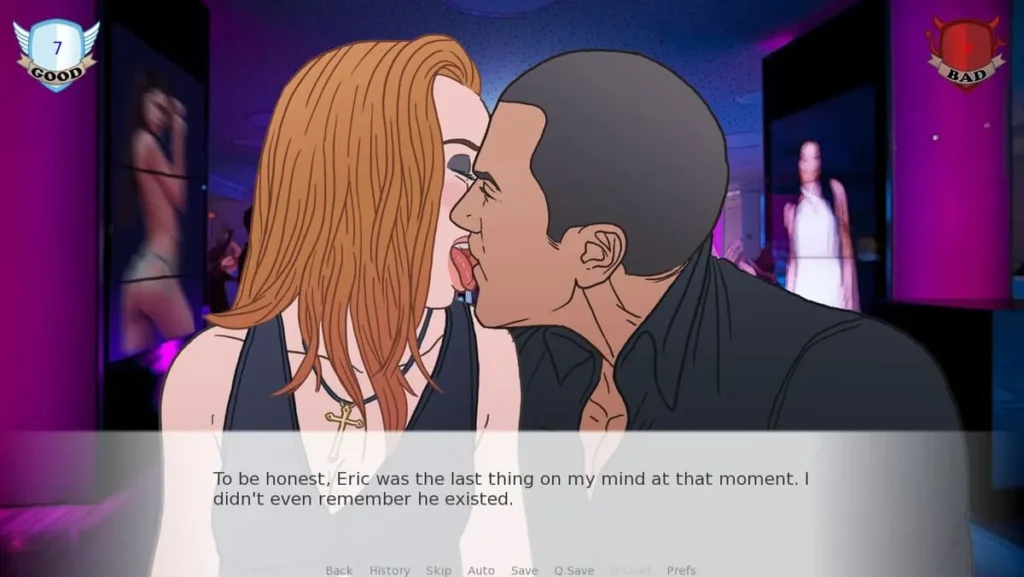



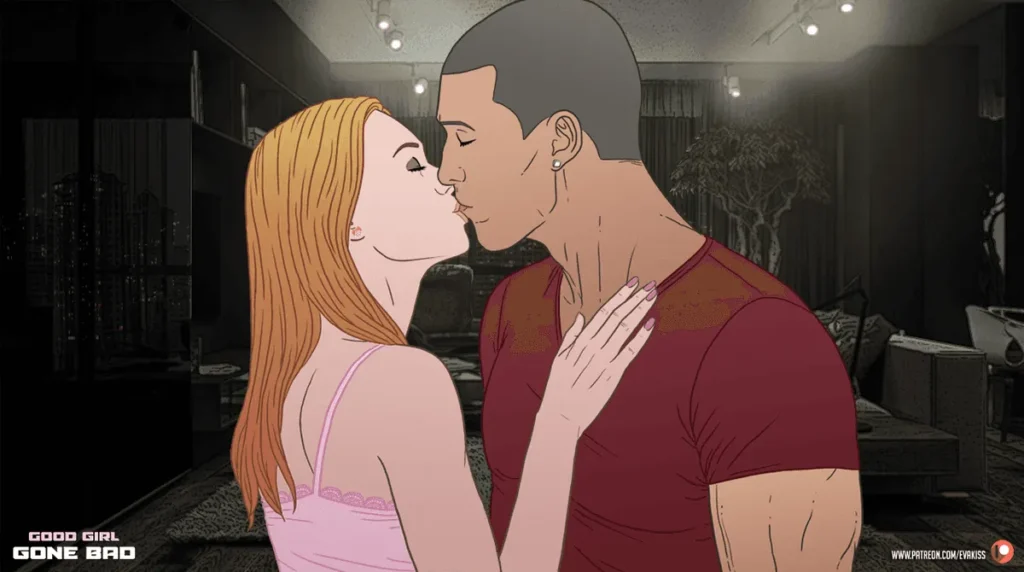

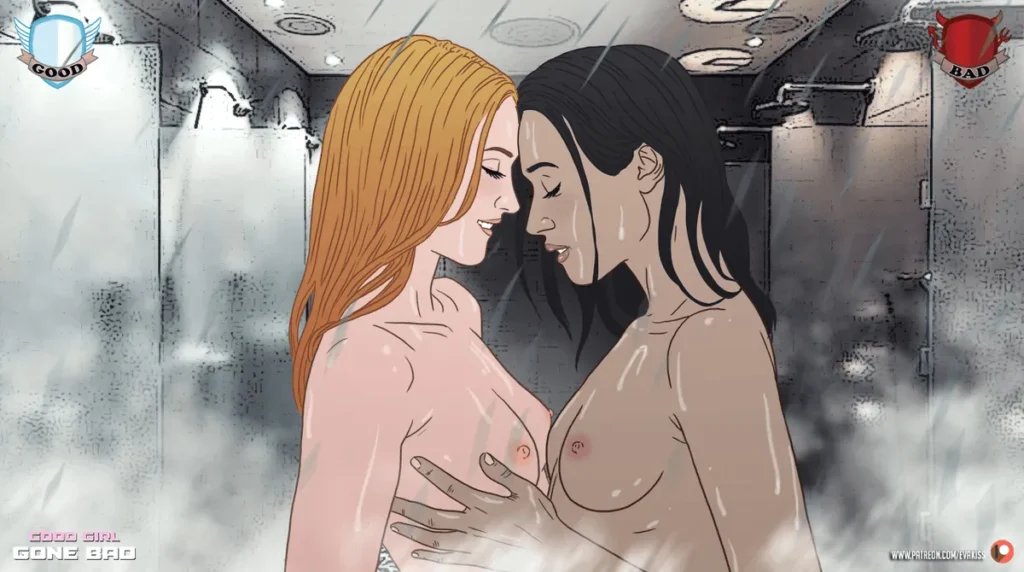
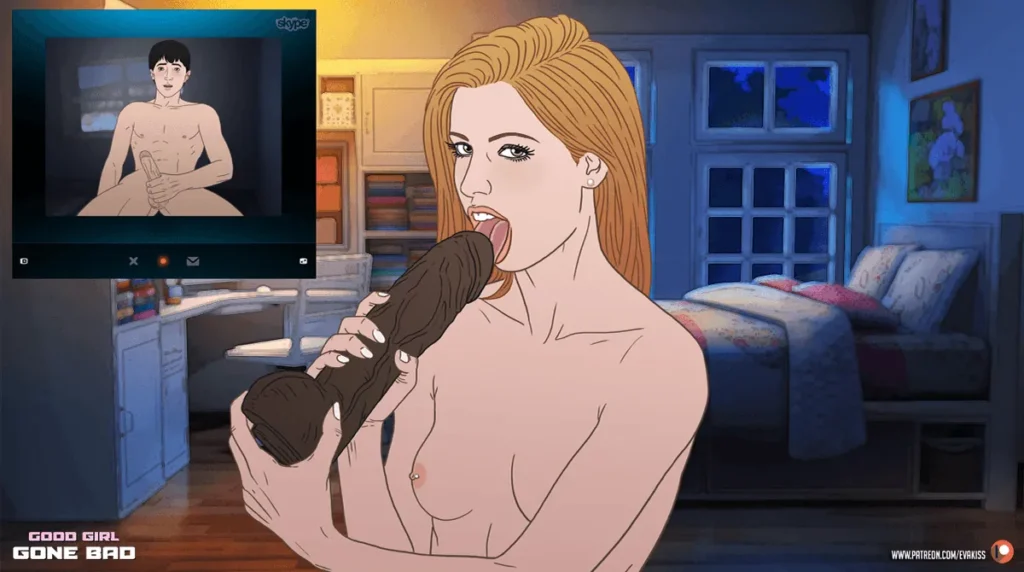




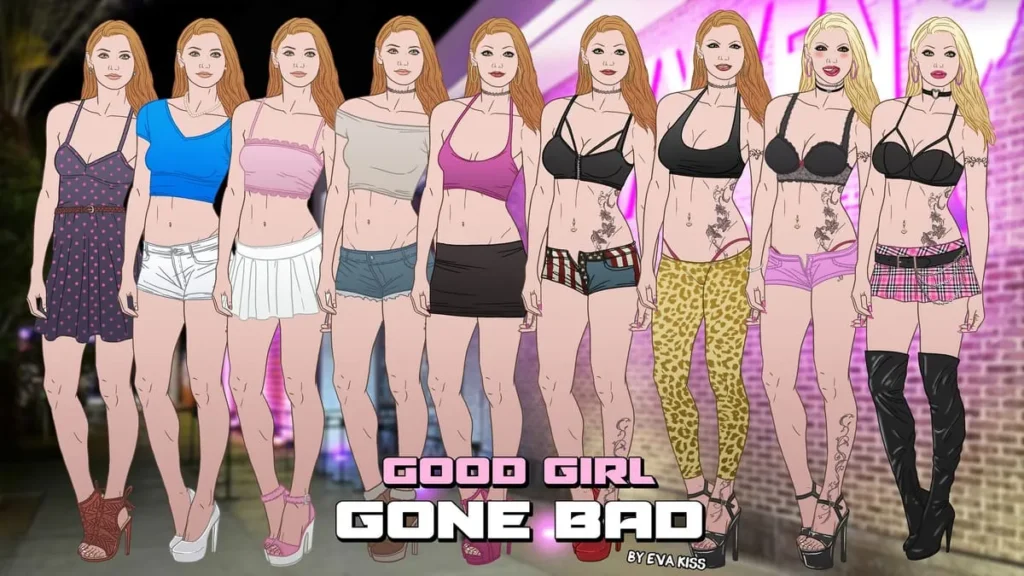




Good Girl Gone Bad review
Explore the branching narrative, character development, and gameplay mechanics of this adult visual novel
Good Girl Gone Bad is an adult life simulation visual novel that has garnered attention for its complex narrative structure and player choice mechanics. Developed by Eva Kiss, this game focuses on the life and adventures of its protagonist Ashley, offering players extensive freedom through hand-crafted, hand-drawn content. The game stands out in the visual novel genre for its emphasis on branching storylines, deep character development, and the ability to shape your character’s journey through meaningful decisions. Whether you’re interested in narrative-driven experiences or exploring how player choices impact story outcomes, this guide covers everything you need to know about this unique interactive experience.
Understanding Good Girl Gone Bad: Game Overview & Core Mechanics
Ever felt like your choices in a game actually mattered? Like you weren’t just clicking through pre-destined dialogue to reach one of two bland endings? 🙄 If you’re tired of visual novels that offer the illusion of choice, then buckle up. The Good Girl Gone Bad visual novel isn’t just another story—it’s a raw, unfiltered sandbox of consequence and self-discovery. This adult life simulation game hands you the reins to a young woman’s life and says, “Go on, break it… or build it. Your call.” 😈
What you’re getting into is a deeply personal journey where every decision, from what you wear to who you kiss, weaves a unique thread in a vast tapestry of narrative possibilities. It’s a masterclass in interactive storytelling, where the core thrill isn’t just seeing a story, but authoring it through your actions. This guide will pull back the curtain on what makes this experience so compelling, from its intricate player choice mechanics to the stunning hand-drawn art that brings every moment to life.
So, let’s dive in and explore the DNA of this unforgettable game.
What Makes This Visual Novel Unique
Forget everything you think you know about the genre. 🧠 Most visual novels are like elaborate storybooks—beautiful, linear, and ultimately on rails. You might get a choice between being “kind” or “rude,” but the plot chugs along the same central track with minor detours. Good Girl Gone Bad smashes that model to pieces.
At its heart, this is a game about transformation and agency. You step into the shoes of Ashley, a college graduate returning to her hometown for a seemingly simple summer. But “simple” is the last word anyone would use to describe what happens next. The game’s brilliance lies in its fusion of genres. It’s not just a visual novel with multiple endings; it’s a life sim, a character creator, and a psychological drama all rolled into one. The branching narrative choices aren’t cosmetic—they are tectonic, shifting the very foundation of Ashley’s personality, relationships, and future.
I remember my first playthrough. I thought I’d be clever, playing a “subtly rebellious” Ashley. One decision to hide a minor secret from a friend seemed inconsequential. Thirty choices later, that tiny lie had snowballed, locking me out of an entire friendship path and opening up a wild, dramatic story branch I never saw coming. That’s the magic here. There’s no “good” or “bad” path in a traditional sense; there are only your paths, each with its own logic, rewards, and heartbreaking consequences.
The final standout feature is its beautiful, hand-crafted art. In an era of homogenized anime styles or sterile 3D models, the art in Good Girl Gone Bad is visceral and full of character. Every expression, every location, feels lived-in and real. This commitment to a unique aesthetic isn’t just for show—it’s a crucial tool for immersion, making every emotional high and low hit that much harder. It perfectly complements the game’s mature themes, treating them with the artistic weight they deserve. ✨
Gameplay Mechanics and Player Choice System
How does this web of possibilities actually work? Let’s talk mechanics. The core loop of this interactive storytelling game is deceptively simple: you read narrative text, make choices, and see the results. But beneath that surface lies a incredibly complex system of flags, variables, and character stats that would make a programmer weep with joy.
The player choice mechanics operate on multiple levels simultaneously:
- Immediate Action Choices: “Do you accept the drink?” “Do you stand up for your friend?” These are the moment-to-moment decisions that drive the scene.
- Character Stat Development: Your choices silently build invisible attributes for Ashley—her Confidence, Her Reputation, her Curiosity, her Submissiveness. These stats aren’t displayed on a screen like a typical RPG; instead, they live under the hood, determining which future choices are even available to you. A low-Confidence Ashley won’t have the option to make a bold move later on.
- Relationship Values: Every character has a dynamic opinion of you, shaped by every interaction. This isn’t just “Liam +5.” It’s a nuanced memory of your kindness, betrayal, flirtation, or indifference.
The genius is in the integration. A choice to study at the library instead of going to a party might boost your “Intelligence” stat, which could later allow you to understand a complex problem and help a friend in a unique way, strengthening that relationship on a specific path. Nothing exists in a vacuum. This creates a truly dynamic adult life simulation game feel, where you’re not just picking dialogue—you’re sculpting a person.
What does this mean for you, the player? Freedom. Sheer, unadulterated freedom. Want to guide Ashley on a path of ambitious career-driven dominance? You can. Prefer a story of sensual exploration and liberation? Go for it. Maybe you want to see how long she can cling to her “good girl” image amidst overwhelming temptation. The game supports it all. This level of player agency is what sets it apart, making each playthrough a personal story you feel genuinely responsible for.
To see just how different this visual novel with multiple endings is from a standard one, let’s break it down:
| Feature | Traditional Visual Novel | Good Girl Gone Bad |
|---|---|---|
| Narrative Structure | Largely linear, with a few major branch points leading to distinct “routes.” | A vast, branching web where small choices constantly create new micro-branches, leading to hundreds of unique story variations. |
| Player Freedom | Choice is often limited to steering the protagonist toward a pre-written archetype (e.g., the “kind hero”). | Complete freedom to mix and match traits, creating a hybrid personality. Ashley can be confident at work but submissive in her private life, or vice versa. |
| Life Simulation Elements | Minimal to none. The focus is almost exclusively on story and dialogue. | Deeply integrated. Managing time, relationships, personal stats, and reputation are core to progressing the narrative and unlocking possibilities. |
| Consequence System | Consequences are often delayed and obvious, tied to major plot flags. | Consequences are immediate and subtle. A choice in Chapter 1 can quietly alter dialogue, close off options, or open new ones in Chapter 5 without explicit announcement. | Character Development | The protagonist’s arc is mostly predetermined for each route. | Ashley’s development is entirely player-driven. Her “arc” is defined by the sum of your choices, making her corruption, redemption, or stagnation feel earned. |
Character Development and Story Branching
This is where the soul of the Good Girl Gone Bad visual novel truly resides. Ashley isn’t a blank slate, nor is she a fixed character. She’s a vessel of potential, and your branching narrative choices determine what fills her. This is a profound take on character development in a visual novel.
At the start, Ashley has a baseline personality—intelligent, a bit naive, and carrying the expectations of her family and hometown. But from the very first screen, those traits are putty in your hands. The development isn’t about unlocking powers; it’s about the erosion or strengthening of morals, the awakening of desires, and the shifting of priorities. Will she seek validation through academic success, through romantic conquests, or through sheer rebellious thrill? You decide.
The story branching is legendary for its complexity. Think of it less like a tree with a few big limbs and more like a neural network—a dense, interconnected web where signals (your choices) fire along pathways, strengthening some connections and severing others. There’s no “chapter select” to jump back and try a different option, because a single altered choice doesn’t just change a scene; it can reroute the entire narrative trajectory.
Pro Tip: Don’t be afraid to save often and intentionally make “bad” or extreme choices just to see what happens. Some of the most fascinating and poignant story content is hidden behind decisions you might normally avoid. It’s the best way to appreciate the sheer scale of the interactive storytelling on offer.
Let’s look at a real example of how a single, early choice can cascade:
The Scenario: In the first few days, Ashley’s old friend invites her to a casual house party. You have a simple choice:
* Choice A: Go to the party.
* Choice B: Stay home to prepare for a job interview.
If you choose A (The Social Path):
Ashley rebuilds her social network quickly. At the party, you’re introduced to a charismatic, slightly dangerous crowd. This unlocks new characters and flirtation options immediately. Your “Social” and “Daring” stats get early boosts. However, you might miss an early opportunity to impress a potential employer, setting your “Career” progress back. This path often leads to stories focused on reputation, peer pressure, and hedonistic exploration.
If you choose B (The Prudent Path):
Ashley appears focused and responsible. She aces the interview, unlocking a prestigious job storyline early. This boosts her “Ambition” and “Independence” stats and opens up narratives about office politics, professional rivalry, and financial independence. The trade-off? Her social life atrophies initially. The friends she didn’t meet at that party remain strangers, and different, often more isolated, story branches about loneliness, self-reliance, or different social circles become available.
This one decision doesn’t just alter a scene—it sets Ashley on a fundamentally different life path, with access to unique characters, problems, and opportunities. By the midpoint of the game, the Ashley from Path A and the Ashley from Path B can be almost unrecognizable to each other, a testament to the game’s incredible commitment to player choice mechanics. This is the essence of its character development visual novel philosophy: you aren’t watching a change, you are the catalyst for it.
The game’s status as a long-term project in development also adds a fascinating layer. New content updates aren’t just extra scenes; they are often entire new branches woven into the existing web, giving you even more reasons to revisit Ashley’s story and explore a new set of branching narrative choices. It’s a living story that grows alongside its community.
Ultimately, Good Girl Gone Bad is more than a game. It’s an experiment in identity, consequence, and storytelling freedom. It respects your intelligence as a player, offering not a guided tour, but a map to a wilderness and the tools to explore it. Every scar, every triumph, every broken rule or kept promise belongs to you. So, what kind of story will you tell? 😏
Good Girl Gone Bad represents a significant entry in the adult visual novel genre, offering players far more than surface-level entertainment through its commitment to meaningful narrative choices and character depth. The game’s emphasis on player agency, combined with its hand-crafted artistic presentation and complex branching storylines, creates an experience where your decisions genuinely matter to how Ashley’s story unfolds. Whether you’re drawn to interactive storytelling, character-driven narratives, or the freedom to shape your own gaming experience, this visual novel delivers on multiple fronts. As the game continues development, it promises to expand these core elements even further. If you’re interested in exploring how modern visual novels can blend life simulation mechanics with compelling narrative design, Good Girl Gone Bad is worth experiencing firsthand.